Casualty recording in Bosnia-Herzegovina
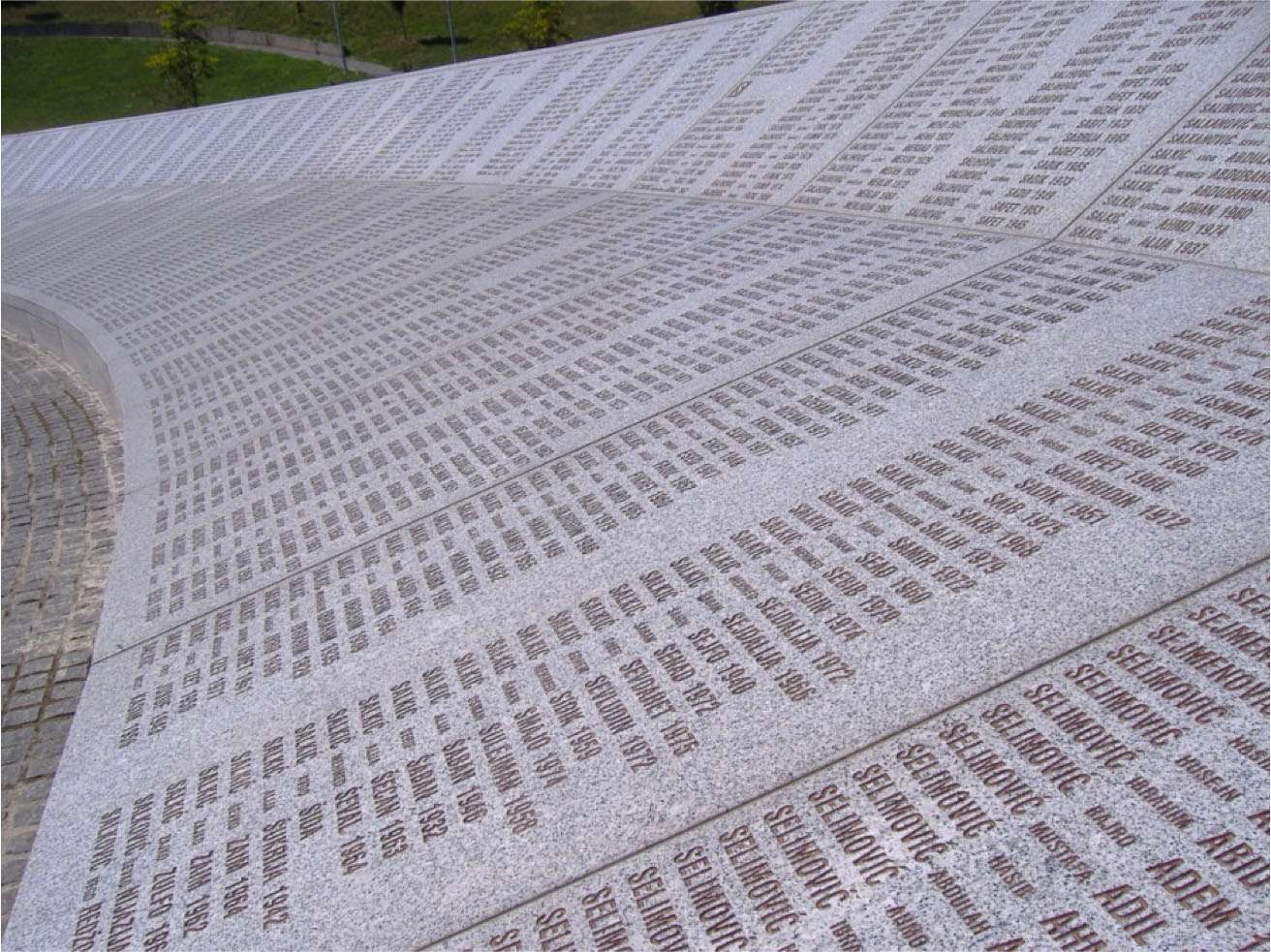
The conflict in Bosnia between 1992-1996 resulted in the death or disappearance of just over 100,000 people. It is believed that as of 2025, approximately 75 per cent of the 31,500 persons reported missing have been accounted for, despite deliberate efforts by some parties to obstruct the location and identification of human remains. Casualty records for Bosnia-Herzegovina are among the most comprehensive of modern warfare.
The International Commission on Missing Persons
The International Commission on Missing Persons (ICMP) is an intergovernmental institution established in 1996 to help governments across the former Yugoslavia to locate those who had gone missing during the Balkan conflicts. To this day, these initiatives continue searching for missing persons, identifying the dead, and establishing the truth about their fate.
The ICMP played a crucial role in pioneering DNA-based identification methods, which was particularly important for identifying victims from mass graves around Srebrenica and other sites. Through a combination of careful forensic anthropology, DNA profiling, dental records, and analysis of personal effects and documents found with the remains, the ICMP helped to identify thousands of victims.
The ICMP helped to develop national institutional capacity to address the issue of missing persons, including through the crafting of legislation to safeguard the rights of families, and upholding the rule of law to ensure appropriate evidence could be provided to domestic courts and the International Criminal Tribunal for the former Yugoslavia. Amongst its lasting achievements, the ICMP was instrumental in establishing the Missing Persons Institute of Bosnia and Herzegovina (MPI).
National legislation
In 2004, the Bosnian government enacted the BIH Law on Missing Persons. According to the ICMP, this law:
… was the first such piece of legislation in a post-conflict country related to missing persons anywhere in the world. It codifies the “right to the truth regarding the fate of missing relatives,” as well as the right to be informed about investigation efforts.
The law established the national Missing Persons Institute, mandated to search for and identify missing persons across the entire country. It also mandated the creation of both the Central Records on Missing Persons (CEN) and a fund for the families of the missing. The CEN was established to provide a unified central database of information on missing persons which consolidated records previously held across regional and national government offices. This centralised database was designed to ensure the integrity and consistency of records on the dead and missing.
The Law on Missing Persons also created sanctions for any person or entity which withheld information on the fate of missing persons, and codified rights for families of the dead and missing including those relating to burial costs, gravesites and property rights.
The International Criminal Tribunal
Casualty records compiled by the ICMP and civil society actors provided valuable evidence in war crimes prosecutions at the International Criminal Tribunal for the former Yugoslavia. Evidence arising in court hearings, including witness testimonies, also helped to add missing detail to some casualty records. This information is preserved in the Tribunal’s official archives.
The role of civil society
From the beginning of the armed conflict, human rights organisations across the Balkans began documenting casualties. One of these organisations was the Research and Documentation Centre of Sarajevo, which over the course of more than a decade compiled a database of 96,985 individual victims. It was published in 2013 as the ‘Bosnian Book of the Dead’.
Although an independent assessment of the database in 2007 judged it to be highly reliable, it has had a controversial reception in Bosnia. Its documentation of just under 100,000 victims is barely half of the 200,000 fatalities widely cited by the Bosnian government and global media outlets. Casualty recorders who worked on the initiative have been subjected to threats by those who claim they have under-represented the full casualty figures.
Information on individual casualties
Sources of information about people killed in the armed conflict in Bosnia-Herzegovina:
The Humanitarian Law Center has developed a database of over 40,000 documents, photographs and witness testimonies pertaining to war crimes and human rights violations committed on the territory of the former Yugoslavia during the 1990s. It also contains court records and evidence presented in the International Criminal Tribunal for the former Yugoslavia (ICTY).
Using materials from within the database, the Humanitarian Law Centre has created individual files for more than 25,659 victims of war crimes and other human rights violations, as well as for members of armed and police forces who died in hostilities throughout the entire territory of the former Yugoslavia. These files contain personal and family information, and information regarding the circumstances of death or disappearance. Each individual file is linked with all the documentary sources, which contain information on this particular person. There are several thousand files relating to Bosnian victims.
The ICMP isn an intergovernmental institution established in 1996 to help national efforts across the former Yugoslavia to locate those who had died or gone missing during the Balkan conflicts. At the end of 2024, it had helped to identify 23,500 of the 31,000 persons reported missing at the end of the conflict.
The ICMP does not publish information about individual victims but it provides a searchable online database for families seeking missing relatives.
The Research and Documentation Center was a Bosnian civil society organisation. Over the space of ten years it researched deaths from the armed conflict and in 2013, in collaboration with the Humanitarian Law Centre (Serbia) it published the Bosnian Book of the Dead. The book contains the names of 95,940 people, both civilians and military personnel, who were killed in the 1992 – 1995 war in Bosnia. The dead are listed alphabetically, together with details of where and when they died.
Roughly half the dead were civilians, 82 percent of whom were Bosnian Muslims. Some 10,000 were women. Of the 24,000 Serb dead, 20,000 were soldiers.
The Bosnian Book of the Dead was published in four parts: