In 2016, a field-developed document set a global baseline for recording casualties of armed conflict. Here is what happened next.
In 2011, casualty recording practitioners gathered in London for the first global conference of the Casualty Recorders Network. They were hosted by Every Casualty Counts which, at the time, was still an internal programme of the Oxford Research Group. The question on the table had rarely been seriously considered: could every fatality of armed conflict really be documented consistently -across different conflicts, different mandates, different legal constraints, and different resources – and if so, how?
The question mattered because the answer would determine whether casualty recording remained a patchwork of methodologically incompatible projects, or whether it could become something that courts, governments, and international agencies would trust and use. Most importantly, could it meet the hopes and demands of the families who had lost those dearest to them?
Four years of consultation and drafting followed this London meeting. A plenary meeting in Bogotá, co-hosted with the Conflict Analysis Resource Center (CERAC), established working groups that met between 2013 and 2015. Participants included numerous casualty recording organisations, together with representatives and experts from the International Committee of the Red Cross (ICRC), the UN Office for the Coordination of Humanitarian Affairs, the International Criminal Court, the Human Rights Data Analysis Group, Human Rights Watch, to name just a few. The people involved came from across the globe – from Afghanistan to Syria, via Colombia, Guatemala, Kosovo, Somalia and more. A draft was reviewed at a second plenary in London in September 2015, co-hosted with Iraq Body Count. The final text was published in November 2016, and launched at the ICRC headquarters in Geneva, as the Standards for Casualty Recording.
The Standards consisted of 58 specific standards divided across five themes – Organisational Transparency, Methodology, Definitions and Categorisation, Security, and Publication and Sharing. They were governed by five overarching principles: Do No Harm, Transparency, Inclusiveness, Consistency, and Responsibility. The Standards were not designed as a rigid operational manual, but rather a framework that practitioners could adapt to their specific contexts, aims, and resources, while maintaining a level of rigour and consistency that made their data internationally comparable and credible.
The Impact of the Standards
The most direct measure of the influence of any type of norm-setting is whether it is adopted beyond the authors that first developed it.
In 2016, the same year the Standards were published, Every Casualty Counts contributed to the ICRC’s revised Commentaries on the 1949 Geneva Conventions. As a result of this collaboration, the revised Commentaries make clear the obligations of all parties to armed conflict to ensure casualties are recorded. This clarification of international law has significant practical (and legal) implications for military commanders, states parties, and international tribunals.
By 2019, both the NATO Allied Command Protection of Civilians Handbook and the UN Department of Peace Operations Protection of Civilians in UN Peacekeeping Handbook (2020) referenced casualty recording and the Standards. Military and peacekeeping planners were being asked, in formal doctrine, to ensure civilian casualties would be recorded in line with best practices.
In 2020, the UN’s global Sustainable Development Goals report incorporated casualty recording data for the first time – a signal that the field had achieved sufficient methodological credibility to inform the world’s primary development accountability framework.
Political recognition followed in 2022, at the 50th regular session of the UN Human Rights Council. Here, states adopted a resolution specifically focused on the impact of casualty recording. It was the first resolution to explicitly recognise casualty recording’s direct relevance to upholding states’ internationally recognised human rights obligations. The resolution led to a global study by the Office of the High Commissioner for Human Rights, published in 2023, which reaffirmed that systematic, rigorous casualty recording is not a technical exercise but a fundamental tool for upholding the right to life.
What the Standards have not changed
The dramatic rise in conflict deaths since 2013 continues. Between 2020 and 2022, the number of armed conflict deaths recorded by the Uppsala Conflict Data Program almost tripled, from 105,000 to over 311,000 per year. Between 2023 and 2024, the number of children killed in armed conflicts quadrupled compared to the previous two-year period (2021–2022). Civilians often bear the brunt of today’s conflicts, especially when explosive weapons are used in towns and cities. The number of people killed in armed violence continues to outpace the resources made available to record them.
The Standards exist so that the terrible human toll of war can be made known, and addressed. They provide the objective tools to measure the growing recourse to armed violence, the scale of violations of international law, and the impact on the communities affected. They also demonstrate, through their effective implementation by willing actors, that where information on conflict deaths is not available this is a deliberate choice by those responsible. Lack of casualty information is the result of states choosing to treat casualty recording as discretionary rather than a moral and legal obligation. It is not inevitable. The Standards provide the framework for documenting the facts, but unfortunately they cannot compel their own implementation.
The Network that built them
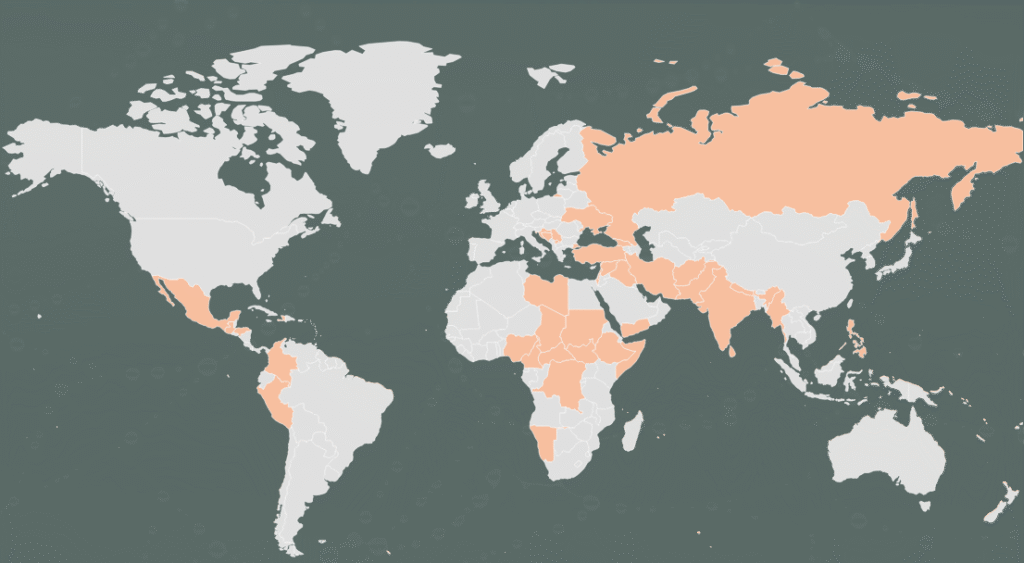
Since its establishment in 2009, the Casualty Recorders Network has welcomed and supported over 100 casualty recording organisations across every major conflict-affected region. Its membership has grown substantially since the Standards were published in 2016, as the shared framework gave the network a purpose beyond connection.
ECC’s work with Network members is focused on Standards conformance: helping organisations apply the 58 standards to their specific contexts, strengthening the methodological rigour of their data, and improving the security and sustainability of their operations. When a Network member’s casualty data is cited in a UN investigation, an International Criminal Court proceeding, or a national reparations programme, it is because that information meets a recognised standard of quality.
What comes next
The tenth anniversary of the Standards’ publication falls in November 2026. ECC and the Casualty Recorders Network are spending this year assessing what has been learned from a decade of implementation, and what the next phase requires.
The immediate priorities are clear: ensuring that the organisations in the Network have the support to apply the Standards rigorously; extending their reach to the states who bear the relevant legal obligations; and developing the practical tools that translate 58 standards into workable guidance for organisations recording casualties in active conflict.
The Standards were built on the premise that every life lost to armed violence deserves to be recorded, identified, and acknowledged. A decade later, that premise remains both urgent and, in most conflict contexts, incompletely fulfilled. The Standards are not the end of the work, but rather the foundations on which we continue to build.
The Standards for Casualty Recording are available free of charge in Arabic, English, French, Spanish, and Turkish. Summarised versions are available in 20 languages. Download them here