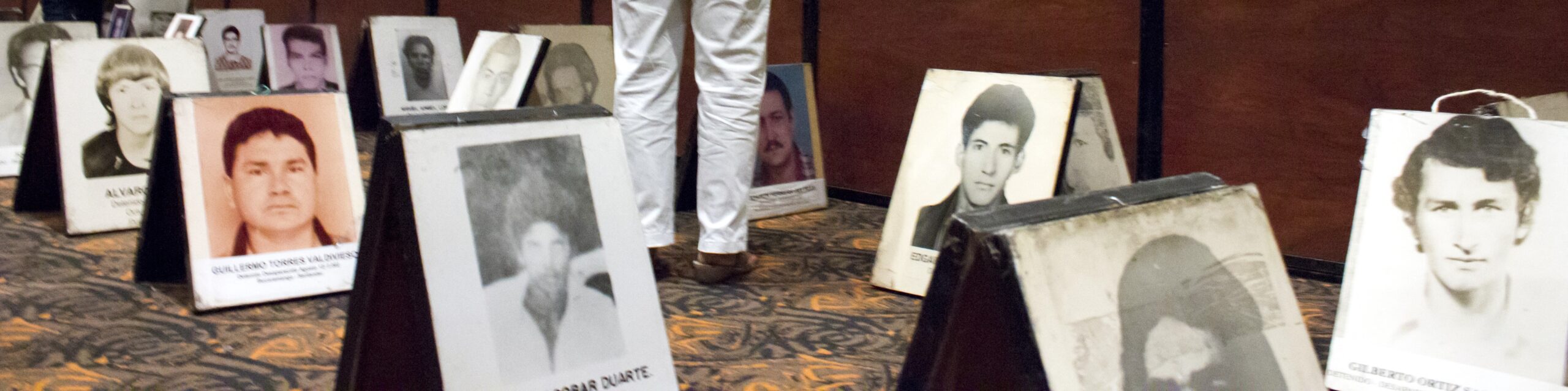
Colombia’s civil conflict originated in the 1960s and officially ended in 2016 with a peace agreement between the government and the Revolutionary Armed Forces of Colombia (FARC). The conflict is believed to have caused approximately 220,000 deaths, 25,000 disappearances, and displaced almost 7 million people.
Both the FARC and the National Liberation Army (ELN) were guerilla groups fighting the government and Colombian elites, with ideologies based in Marxism. In the 1980s, right-wing paramilitary groups emerged to fight the FARC and ELN and protect the interests of landowners.
Both the guerillas and the paramilitaries became deeply entrenched in the cocaine trade during the 1980s. Civilian populations in drug-producing areas were subject to atrocities by all sides. By the late 1990s, the FARC was believed to control around a quarter of Colombian territory, with nearly 20,000 fighters. All parties employed violence, kidnappings, and extortion as sources of leverage and income, terrorizing ordinary Colombians. Colombia supplied up to 90 percent of the world’s cocaine in the early 2000s.
Between 1970 and 2010, an estimated 25,000 people were kidnapped by parties to the conflict. Between 1990 and 2016, landmines killed or injured over 11,000 people —the second-highest number globally after Afghanistan.
In the early 2000s, the government used airstrikes to attack guerrilla groups and significantly reduced their capacity. This led to a significant decrease in overall rates of killing nationwide, although there were allegations of serious human rights violations by the government and military. Formal peace talks between the government and the FARC began in 2012. A peace agreement was signed in 2016, officially ending five decades of guerrilla war.
However, implementation of the agreement has been challenged by parties who disagreed with the process. Violence between dissident guerrilla groups and government forces continued. There have been continued rounds of negotiations, ceasefires, and suspensions between the government and multiple armed groups since 2022. The dissident armed groups continue to fragment internally, creating an increasingly complex conflict landscape. Rival factions compete for control of illicit economies, trafficking routes, and strategic territories. As of 2025, civilians continue to be directly targeted through coercive measures, massacres, and selective killings by groups asserting territorial control.
What we’re doing
Every Casualty Counts has worked with casualty recording organisations in Colombia for over a decade, supporting their efforts to document unlawful killings, to bring their research to the attention of international policy makers, and to seek justice for families.
There is a future, if there is truth
Motto of the Colombian Truth Commission
Statement to HRC55 on the importance of disaggregated casualty records for implementing the Colombian peace agreement
2 April 2024
Every Casualty Counts and Casualty Recorders Network member Campana Colombiana Contra Minas participated in the dialogue with the International Expert on Colombia, concerning her report on obstacles to implementation of
Read more…
Counting the Cost: Casualty recording by states
5 October 2012


Image: Campaña para llenar el vacío de la desaparición by Comité Internacional de la Cruz Roja, licensed under CC BY-NC-ND 2.0.