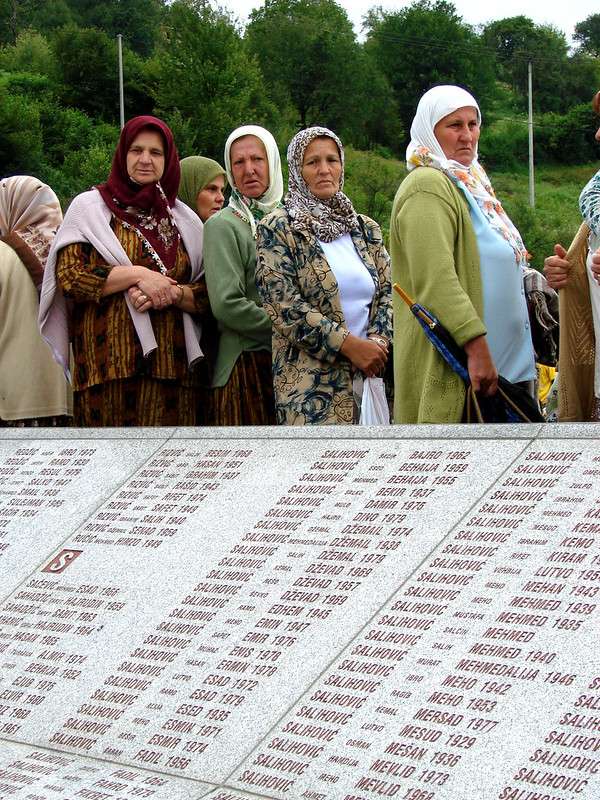
We campaign for greater support for casualty recording across the international community, as well as the media and public. Everybody counts – and should be counted.
Armed violence continues to grow globally, yet news headlines and political debates still focus on numbers, not people. There is a widely held – and false – assumption that in ‘the fog of war’ it is not possible to record the dead accurately. This belief creates a smokescreen for those armed actors who don’t want the world to see the reality of what is happening.
Our experience shows that it is possible to record and identify victims of armed conflict accurately and promptly, even in the most extreme circumstances – as long as there is political will and it proper resources. We work to challenge apathy, encouraging the public to demand and expect comprehensive accounts of casualties in all contexts. We refuse to accept the deliberate erasure of identity of those affected by war.
Without recognition, casualties are consigned to a psychological mass grave. We refuse to leave them there.
We work with Network members to raise the profile of casualty recording initiatives nationally and internationally. We highlight what they have achieved, and challenge authorities to meet these standards. Through each of the individual lives carefully reconstructed by Network members, we help people around the world understand the reality of armed conflict and its toll in human lives.
Network-led advocacy
We work with Network members to increase global recognition of the importance of casualty recording. We also campaign for states to fully recognise and implement their obligations under international law to make all feasible efforts to identify and document victims of armed conflict and violence.
We work at the United Nations to build greater recognition of the importance of recording casualties, and increase support for casualty recording initiatives. We contribute information from the Network to international consultations and debates, to ensure that decision-makers have access to reliable information on the true human toll of armed violence.
We bring the voices and research of our Network partners directly to the centre of international decision-making, to focus attention on specific issues concerning the documentation of casualties in each context. For example:
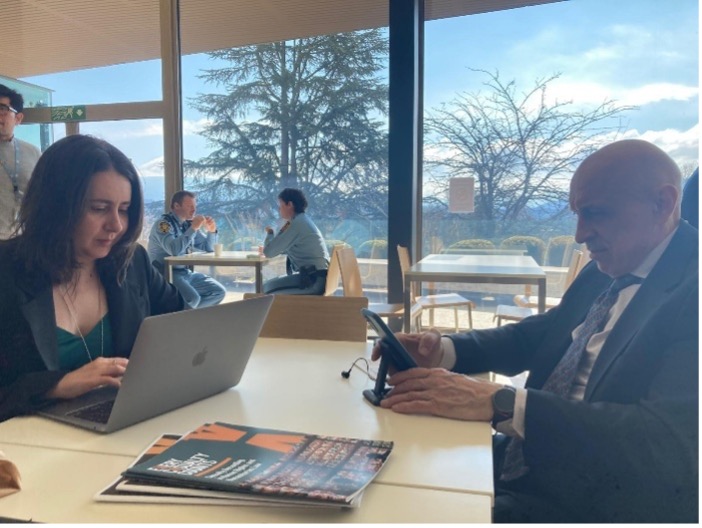
- We brought casualty recorders from Ukraine to the Human Rights Council in Geneva, to educate diplomats about the obstacles and needs of casulaty recording in the current conflict.
- We have enabled casualty recorders from Haiti, Syria and beyond to intervene directly in UN debates.
- We helped more than a dozen Network members provide input to a UN study on the impact of casualty recording.
Just met with […] and discussed future steps with documentation. Geneva brings positive impacts. Thanks to all!
Whatsapp message from Network Member
Influencing global policy and action
We influence states and international actors to recognise the importance of recording all casualties individually, and to adopt policies which make this happen.
We successfully campaigned for a UN resolution recognising the importance of casualty recording and its impact for the first time. We have also ensured the role of casualty recorders was recognised in resolutions on Myanmar, Syria and the prevention of genocide. We worked with diplomats to deliver a joint statement in support of casualty recording, signed by 50 states. We helped the UN Human Rights Office (OHCHR) develop its public Guidance on Casualty Recording.
Our work has influenced military actors too. We worked with NATO Allied Command and the UN Department of Peace Operations to ensure that their policies on protecting civilians recognised the importance of casualty recording. With allies across the arms control sector we ensured that the recently adopted international Political Declaration on protecting civilians from the use of explosive weapons also recognises the importance of casualty recording.
Image: Srebrenica Massacre by Adam Jones licensed under CC BY 2.0