February 19, 2026 – A landmark Lancet study led by ECC board chairman Prof. Michael Spagat shows that Gaza’s Ministry of Health undercounts death toll by 35%, with more than 75,000 people killed in the first 16 months of conflict.
The study confirms that the Ministry of Health (MoH) figures represent a “conservative floor” rather than an overcount, dispelling misinformation campaigns that have sought to discredit Palestinian casualty data. Crucailly, the study is based on rigorous casualty recording methods, validating that they are possible and effective, even amidst the chaos of war.
However, the study has been prominently shared by major news outlets, with varying interpretations.
Interview: we invite Prof. Spagat to clarify the key points in his own words
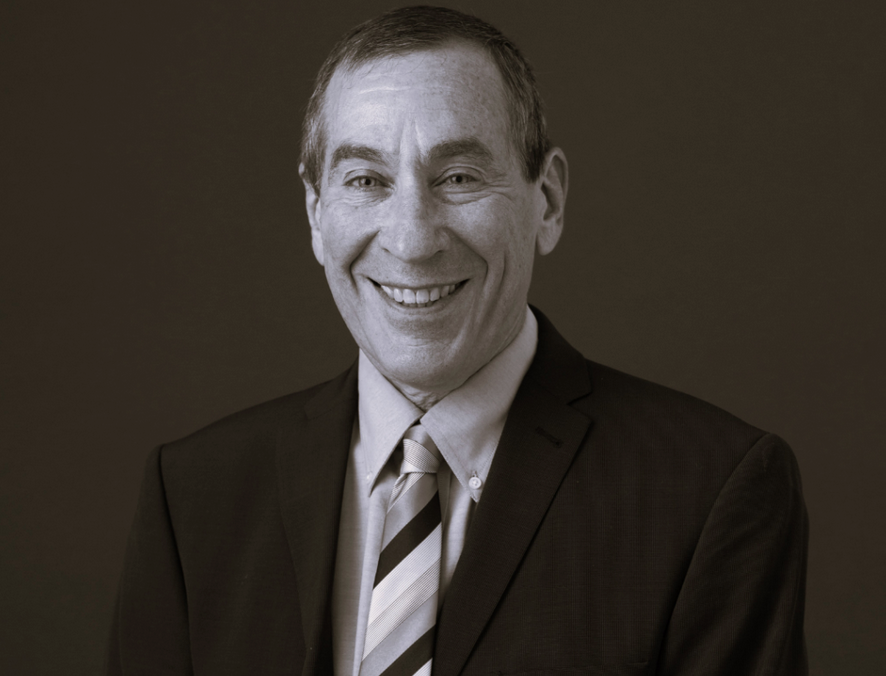
ECC – Can you talk us through the report’s main findings?
MS – MoH figures are a substantial undercount but are broadly accurate on demographics. There have been a substantial number of nonviolent deaths indirectly attributable to the war but violent deaths greatly outnumber nonviolent ones, contrary to what many people expected.
ECC – You find that the MoH undercounted violent deaths by around 35%. The official MoH figures is now around 71,000. Does this mean there are now 105,000 violent deaths?
MS – No. First of all, there are wide margins of error around our estimates so I would not place big emphasis on one number like 35%. More importantly, the MoH continues to process reported deaths so I think that the gap between MoH totals and true numbers has been closing over time. When we completed our work the official MoH number for violent deaths was around 45,000. Since then they have received and/or processed thousands of new reported deaths, many of them for the period covered by our survey (October 7, 2023 to January 5, 2025).
In the first version of our paper we compared with the MoH figure of around 45,000 and you can still find this version of the paper online. But later I received the information that, after processing more reported deaths, the official figure for the same fixed period had gone up to around 49,000 so we issued a revised version of the paper replacing 45,000 with 49,000. However, new information continues to flow into the MoH and they continue to add to their list. I don’t have a current figure for our coverage period, but I think that it would probably be somewhere around 53,000 now. But the MoH work is ongoing and I think that there are still many more deaths to be discovered.
The important thing to note is that this is the nature of casualty recording. It would require years of effort and big funding to assemble a near-complete list of deaths since October 2023. However, I think that there has been progress over the last year. We can’t just say that there is some magic multiplier that converts official MoH figures into true numbers of people killed.
Professor Mike Spagat, report author
…this is the nature of casualty recording. It would require years of effort and big funding to assemble a near-complete list of deaths since October 2023
ECC – There was a letter in the Lancet predicting that there would be 4 indirect deaths for every direct (violent) death. Were you surprised that your estimate for violent deaths was very much higher than your estimate for indirect deaths (also know as excess nonviolent deaths)?
MS – No, this is about what I expected. Many people seem to think that there is some reliable multiplier for converting violent deaths into indirect deaths in war (reminiscent of the mythical multiplier I alluded to in my answer to the previous question). But individual cases vary hugely. Thankfully, the conditions in Gaza were not ripe for huge numbers of nonviolent deaths indirectly caused by the war. I’ve heard some influential people saying that all the aid that was poured into Gaza over the years was wasted but nothing could be farther from the truth. One big effect of the aid was to create a very strong public health infrastructure: well-trained doctors, a network of good hospitals, high vaccination rates, etc. This investment played a central role in staving off a humanitarian situation that was grave, to be sure, but could have been far worse.
So, no, I wasn’t surprised. I was surprised by the very high violent death estimate.
As an organization dedicated to remembering every individual affected by conflict, this research deeply validates our approach. It shows that casualty recording is not just about statistics – it’s about ensuring that every person lost to violence is acknowledged, counted, and remembered.
As mentioned in the report’s closing discussion:
This first independent population survey of mortality from the conflict in the Gaza Strip establishes that violent deaths have substantially exceeded official figures…
…These results underscore the feasibility of mortality surveillance in highly challenging conflict settings and provide a crucial empirical foundation for assessing the true human cost of the conflict.…