Ninety-four organisations signed a joint statement welcoming the Commission’s renewed mandate at HRC61. The argument they made deserves wider attention.
For the families of people who disappeared into Syrian detention facilities, official recognition of what happened – and who was responsible – remains one of the few forms of justice within reach. The International Commission of Inquiry on Syria, established by the Human Rights Council in 2011, has spent more than a decade building the evidentiary foundation that makes such recognition possible: documenting violations of international humanitarian law, establishing facts, and working to identify those responsible. Its findings have provided an evidentiary foundation for accountability processes, including universal jurisdiction proceedings in multiple European jurisdictions. The testimony it has gathered constitutes a record that documentation organisations – including many of the statement’s signatories – are working to ensure can be used in those proceedings.
That record exists because the Commission has been independent. The renewal of its mandate matters because the independence question has not, in Syria’s current transitional moment, been straightforwardly settled.
Why this matters
At the 61st session of the Human Rights Council, 94 Syrian and international organisations – including Every Casualty Counts – welcomed the renewal of the Commission’s mandate as originally established in 2011. The welcome was not unconditional. The organisations signing were careful to specify what renewal means, and what it must not be allowed to mean. Understanding the distinction is not a matter of legal technicality. It is a matter of what makes documentation usable in the accountability processes that Syria’s transition will eventually require.
What “unchanged” means – and why it matters
The Commission’s mandate, as established in 2011, tasks it with investigating “all alleged violations of international human rights law since March 2011 in the Syrian Arab Republic, to establish the facts and circumstances that may amount to such violations and of the crimes perpetrated, and where possible, to identify those responsible with a view to ensuring that perpetrators of violations, including those that may constitute crimes against humanity, are held accountable.”
The joint statement welcomed that this mandate “remains unchanged in its core investigative duties and fully independent in its implementation.” The word unchanged carries specific weight. A mandate that has been subtly modified, qualified, or narrowed produces documentation that is contestable in accountability processes. Courts, truth commissions, and reparations mechanisms require evidence produced by a body whose independence is unambiguous. Ambiguity is not a technicality: it is a vulnerability that those seeking to evade accountability will exploit.
The advisory role – and why separating it matters
Syria’s transitional government has indicated a willingness to cooperate with the Commission, including accepting methodological guidance on investigations and on the transitional justice process. The joint statement acknowledges this and, carefully, welcomes it – “insofar as it contributes to ensuring Syria’s compliance with its obligations under international law; and it does not restrict, limit or replace the Commission’s core and independent investigative and reporting functions.”
This is the critical distinction. A documentation body that advises the government it is simultaneously investigating faces a structural conflict of interest. If the Commission’s advisory functions were to constrain its investigative ones – if its relationship with the transitional authorities influenced what it reported or how – the evidentiary value of its findings would be compromised. The 94 signatories were explicit: any advisory role must remain “strictly within its existing capacity” and must not “replace, restrict, or undermine” the core mandate.
For organisations working in casualty recording and documentation, this is not an abstract concern. It reflects a principle that applies to any documentation body operating in a context where those being documented retain influence over the documenter. Independence is not a diplomatic courtesy. It is a methodological requirement.
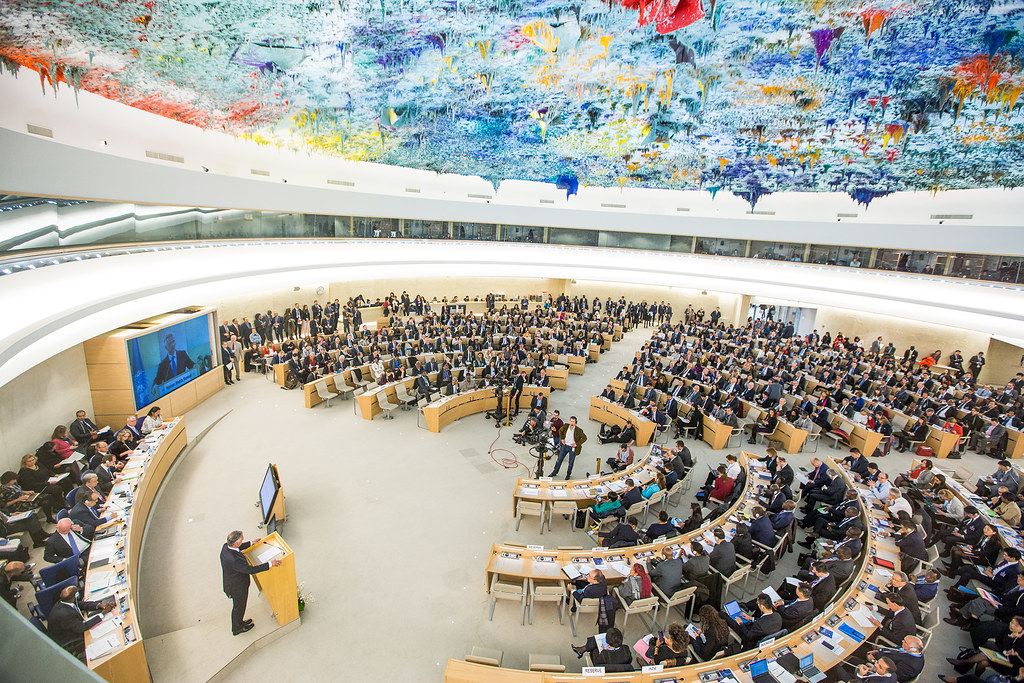
Credit: UN photo/Ema Okic
Access as a precondition for documentation
Documentation that cannot reach the evidence it needs cannot do its job. The joint statement calls for “full, sustained, and unimpeded access” for the Commission across Syria. It welcomes commitments made by the Syrian Ministry of Foreign Affairs to maintain cooperation with UN mechanisms, but stresses that “these commitments should be translated into concrete practice, in full respect of the Commission’s independent investigative mandate.”
This matters particularly for casualty recording. Verified records – the kind that hold in accountability processes – require access to witnesses, survivors, sites, and documentation held by official bodies. Where access is restricted, documentation gaps emerge. Where documentation gaps emerge, impunity finds room. The call for unimpeded access is not diplomatic language. It is a description of what verification actually requires on the ground.
What depends on what comes next
The joint statement closes with a forward-looking condition: that any future decisions affecting the Commission’s mandate be “firmly anchored in tangible improvements in the human rights situation in Syria.” This includes implementation of the Commission’s own recommendations, protection of civic space, and the “meaningful, inclusive and safe participation of victims” – a term that, in transitional justice frameworks, encompasses survivors, bereaved families, and affected communities, not only those who died.
That final phrase carries particular weight for Every Casualty Counts. Our mission is to ensure that every life lost to armed violence is identified correctly, recorded effectively, and recognised and remembered appropriately. Casualty records are not only evidence in legal proceedings. They are recognition. For families who have spent years seeking acknowledgement of what happened to people they lost, a record that stands – produced by a body whose independence is beyond question – is the closest available form of dignity.
Syria’s transition is still being defined. What it ultimately delivers for survivors, for families of those killed and disappeared, and for the possibility of accountability will depend on whether institutions like the Commission of Inquiry are permitted to function as they were designed to function. The renewal of a full, independent, uncompromised mandate is a necessary condition. It is not, by itself, sufficient.
Every Casualty Counts joined 93 organisations in affirming this position. The full joint statement is available HERE.
Every Casualty Counts is the only global organisation focused exclusively on casualty recording. We are a co-signatory of the joint statement referenced in this article.