Casualty recording in Mexico
The scale of killing, its wide distribution across space and time, the complicity or acquiescence of state actors, and the lack of resources combine to make effective documentation of casualties in Mexico an extremely complex task. There is no comprehensive record of those killed or disappeared, and the backlog of cases increases daily.
At the national and federal state level, action to investigate and document killings and disappearances is grossly inadequate. A detailed analysis of the systemic deficiencies was published in a monitoring report in early 2025 by Mexican human rights organisations.
Suppression of investigations
The direct or indirect involvement of government agents in unlawful killings and disappearances is a significant factor in the systemic failure to search for and document disappeared persons. Criminal cartels frequently act with the involvement, support, or acquiescence of state actors, creating a powerful motive to suppress investigations.
In 2025, an ‘extermination camp’ was revealed in Teuchitlán, Jalisco state, by civil society search groups. The site, operated by the Jalisco New Generation Cartel, was equipped with crematoria where victims’ bodies were systematically destroyed. The discovery underlined the industrial scale of enforced disappearance and killing in Mexico. The fact that the site had already been examined by state security officials who had apparently found nothing of significance there raised further questions about state agents’ collusion or acquiescence in these crimes.
In other instances, investigators are too fearful of reprisals by powerful criminal actors to conduct thorough inquiries into reports of killings and disappearances. As a result, cases are delayed, prematurely closed, lost, or never begun.
Whatever the reason for the lack of investigation, the result is near total impunity of those responsible for killings and disappearances. This in turn serves to further silence victims and their families, completing the process of erasing victims from the record.
Lack of capacity
Aside from political and criminal interference hampering investigations, there is also a dire lack of technical resources and expertise to address the crisis. At both national and state level, there are insufficient numbers of trained forensic and criminal investigators, laboratory services, and resources allocated to the task of searching for and identifying the dead. An Extraordinary Forensic Identification Mechanism was established in 2019; a National Centre for Human Identification opened in 2022 but was shut down in early 2025.
Investigation and documentation is further hampered by the lack of nationwide and state-level coordination. There is no central database, or system of compatible databases, which would allow data from unidentified human remains to be cross checked with records concerning missing persons. The law prohibits local authorities from cremating unclaimed or unidentified bodies, but they are frequently buried in mass graves without sufficient documentation to allow for future identification.
It is not unusual for families to spend years trying to locate a missing family member only to discover that their loved one’s body has been in state custody, unidentified, since the day they disappeared. If the body has subsequently been disposed of in an undocumented grave, the bereaved face the double disappearance of their relative – once alive, and once dead.
Civil society action and organisations
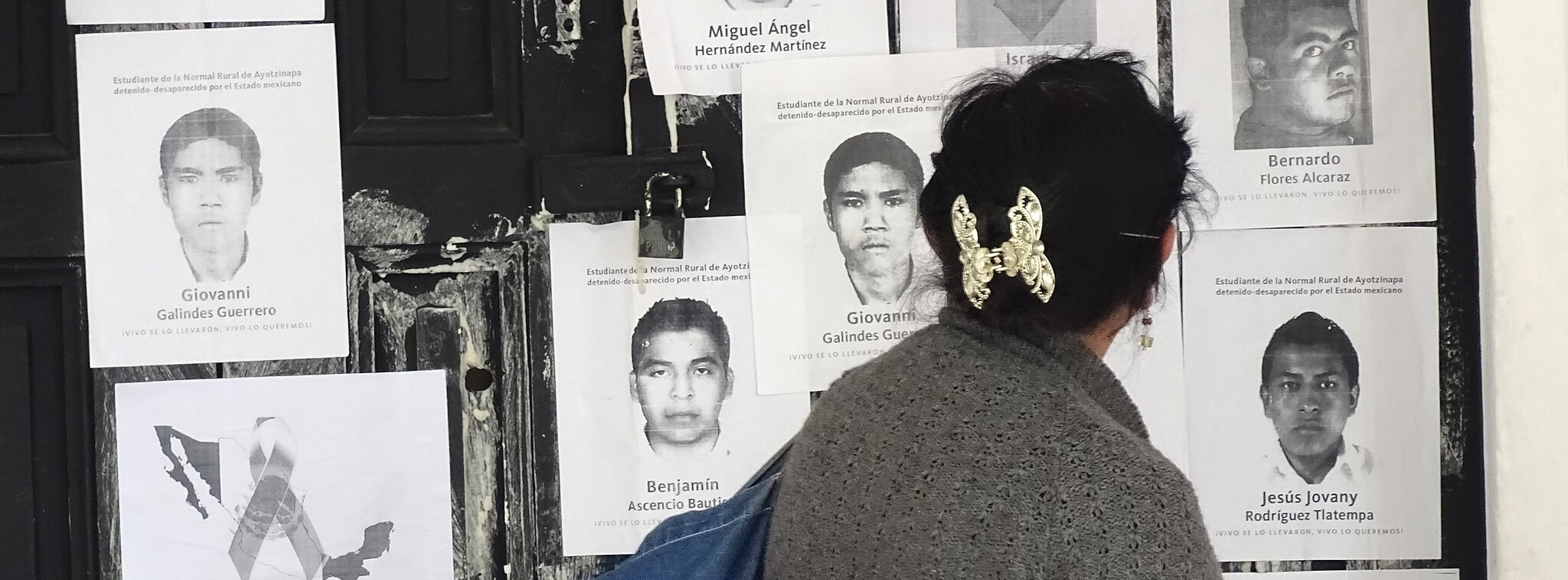
Families and civil society groups comprised of families of the missing are the main drivers of investigation and documentation of killings and disappearances. These organisations, predominantly led by women, search for traces of their missing loved ones, exhume clandestine and mass graves, conduct DNA sampling and maintain secure databases documenting the evidence they uncover. They organise public demonstrations and acts of collective memory, alongside pressuring state authorities to take effective action to address the crisis of disappearances and killings. Public campaigning was a crucial driver behind the adoption of the 2013 General Law on Victim Assistance and the 2017 General Law on the Forced Disappearance of Persons, Disappearances Committed by Individuals, and the National System for the Search for Persons.
Families searching for answers about the fate of their loved ones often face threats and further violence. Several prominent family activists have been murdered for their outspoken and persistent efforts to uncover the truth. Despite the risks, the number of civil society groups involved in searching for and documenting the dead, currently numbering more than 230, is constantly growing. They remain the primary source of action and expertise relating to documentation of the dead in Mexico.
Information on individual casualties
Sources of information about people unlawfully killed or disappeared in Mexico:
Data Civica is a Mexican NGO established in 2015. Its casualty records date from 2018 to the present day. Data Civica aims to document the victims of armed violence in Mexico, including criminal and military violence, in order to preserve truth and historic memory, and to support reparation and justice for victims. Data Civica publishes monthly newsletters including information about casualties.
Fundacion Justicia is a Mexican NGO established in 2011. It documents killings and enforced disappearances of migrants in Mexico, mainly orginating from Honduras, Guatemala and El Salvador. Fundacion Justicia provides legal and psychosocial support to survivors and victims’ relatives, helps them search for their loved ones, and advocates for better protection for migrants.
The Movimiento is an umbrella organisation established in 2015 which encompasses more than 90 independent family-led search groups across Mexico. Their site provides links to each of these local groups, who maintain their own records of missing and deceased persons.
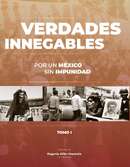
The Commission for Truth, Historic Clarity and Justice for Grave Violations of Human Rights from 1965 – 1990 investigated killings and other grave violations committed during the ‘Dirty War’ period. Its 2021 report Verdades Innegables (Undeniable Truths) contains a list of 183 victims of ‘death flights’ and 1,103 victims of enforced disappearances.